AI vs. Paralegal: What a Month of AI-Assisted Legal Research Taught Me
This article describes one practitioner’s research workflow experiment and is not legal advice. AI research outputs, including case citations, should always be independently verified before being relied on in any filing or client matter.
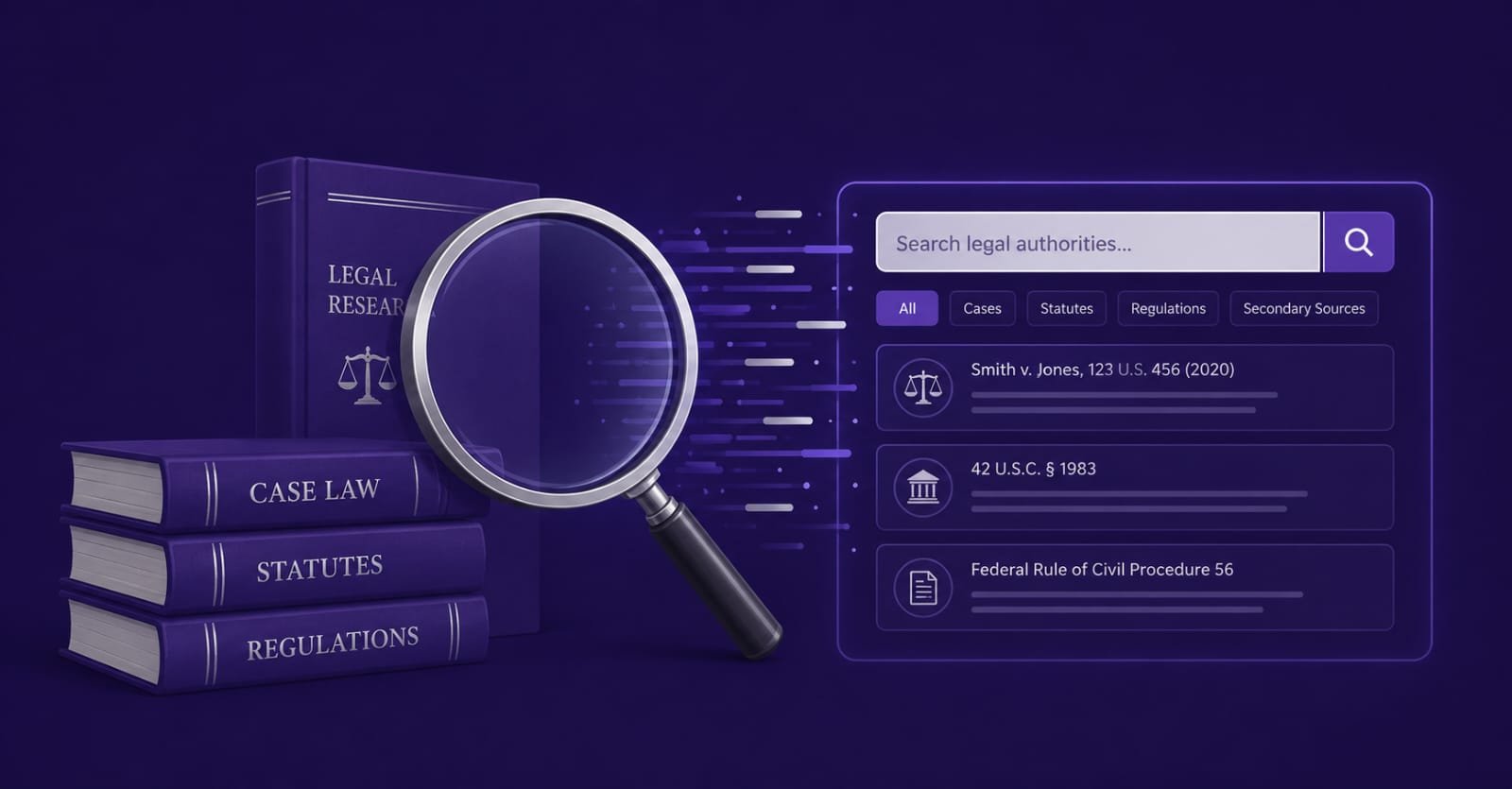
For one month, I ran every research task that would normally go to my paralegal through an AI research tool first, comparing speed, accuracy, and cost side by side. The results were more nuanced than either “AI replaces paralegals” or “AI legal research isn’t ready yet” — both of which I’d heard confidently stated before running the actual experiment.
A 2024 Stanford study testing legal AI research tools found Lexis+ AI returned incorrect or unsupported answers in roughly 17% of test queries, compared to about 34% for Westlaw’s AI tool at the time. Even the better-performing tool was wrong nearly one in six times — which is exactly why every citation it produced still needed independent verification before going anywhere near a filing.
Where AI Research Won on Speed
For broad, well-established areas of law — summarizing the general elements of a claim, pulling an initial list of potentially relevant cases, or drafting a first-pass research memo structure — AI tools were dramatically faster than waiting on a paralegal’s turnaround, often producing a usable starting point in minutes rather than the better part of a day.
Where the Paralegal Won on Accuracy and Judgment
For nuanced fact-pattern matching — finding cases that weren’t just topically related but actually analogous on the specific facts that mattered to my case — my paralegal consistently outperformed the AI tools. She also caught a citation error in an AI-generated memo within minutes that I hadn’t spotted myself, exactly the kind of verification step that error-rate data like the Stanford study suggests is still necessary.
The Hybrid Workflow That Actually Worked
By week three, the most effective approach wasn’t “AI or paralegal” — it was AI for the first broad sweep (casting a wide net quickly), followed by my paralegal narrowing and verifying that initial list against the actual fact pattern. This cut her research time on a typical memo by a meaningful margin without removing the human verification step that the error rate data made clear was still necessary.
The Cost Comparison
A legal-specific AI research subscription typically runs somewhere in the low hundreds of dollars monthly for a solo or small-firm setup — often replacing what would otherwise be separate Westlaw or LexisNexis spend. That’s a real cost reduction, but it’s a reduction in research-tool cost, not a replacement for paralegal compensation, since the highest-value parts of her work — judgment, verification, and fact-pattern matching — were exactly the parts AI handled worst.
Frequently Asked Questions
Did AI research ever produce a fabricated or incorrect citation?
Yes, more than once across the month — which is precisely why independent verification of every citation remained non-negotiable throughout the experiment.
Is AI legal research accurate enough to skip a human check?
Not based on this experiment — even the stronger-performing tool in independent testing was wrong in roughly one of every six queries.
Did this experiment reduce the need for a paralegal?
It changed what she spent time on more than it reduced her hours — less time on broad initial sweeps, more time on verification and fact-specific judgment calls.
Which is more cost-effective for a solo practice — AI research tools or a part-time paralegal?
They’re not really substitutes for each other; the most effective and cost-efficient setup in this experiment combined both rather than choosing one over the other.
Final Thoughts
AI research tools are a genuinely useful first-pass filter, not a replacement for the judgment and verification a trained paralegal brings to fact-specific research. If you’re also looking at AI on the drafting side of practice, our pieces on 5 AI contract drafting tools tested and how solo lawyers are cutting drafting time in half cover the other half of a similar AI-assisted workflow.