How Solo Lawyers Are Using AI to Cut Drafting Time in Half
This article describes general workflow practices and is not legal advice. Every jurisdiction has its own rules on AI use, client disclosure, and confidentiality — check your state or country’s bar guidance before adopting any AI tool in practice.
Solo practice means there’s no associate to hand the first draft to. For years that meant every contract, demand letter, and engagement agreement started from a blank page or a battered template folder. Here’s how that’s changed for solo and small-firm attorneys who’ve actually integrated AI into daily drafting work, not just experimented with it once.
Word-native drafting tools built specifically for transactional law report being used across millions of contract reviews industry-wide as of 2026, with vendors citing drafting speed improvements of up to several times faster than starting from a blank document — though actual time saved depends heavily on document complexity and how much review the output still needs.
Where the Time Actually Goes
For most solo transactional attorneys, drafting time breaks down roughly into three buckets: structuring the document (deciding what clauses are needed and in what order), generating the actual language, and reviewing/redlining against the client’s specific situation. AI tools are genuinely strong at the first two and don’t meaningfully shortcut the third — which is exactly why “drafting time” dropping doesn’t mean “review time” disappears too.
Building a Clause Library Instead of Starting Over
One of the most consistent workflow changes among solo attorneys adopting AI drafting tools is building a reusable, AI-searchable clause library from past work, rather than relying purely on the AI’s general training. Feeding a tool your own historical agreements as reference material tends to produce drafts that already match your firm’s established language and risk tolerance, instead of generic boilerplate that needs heavier editing.
The Realistic Workflow
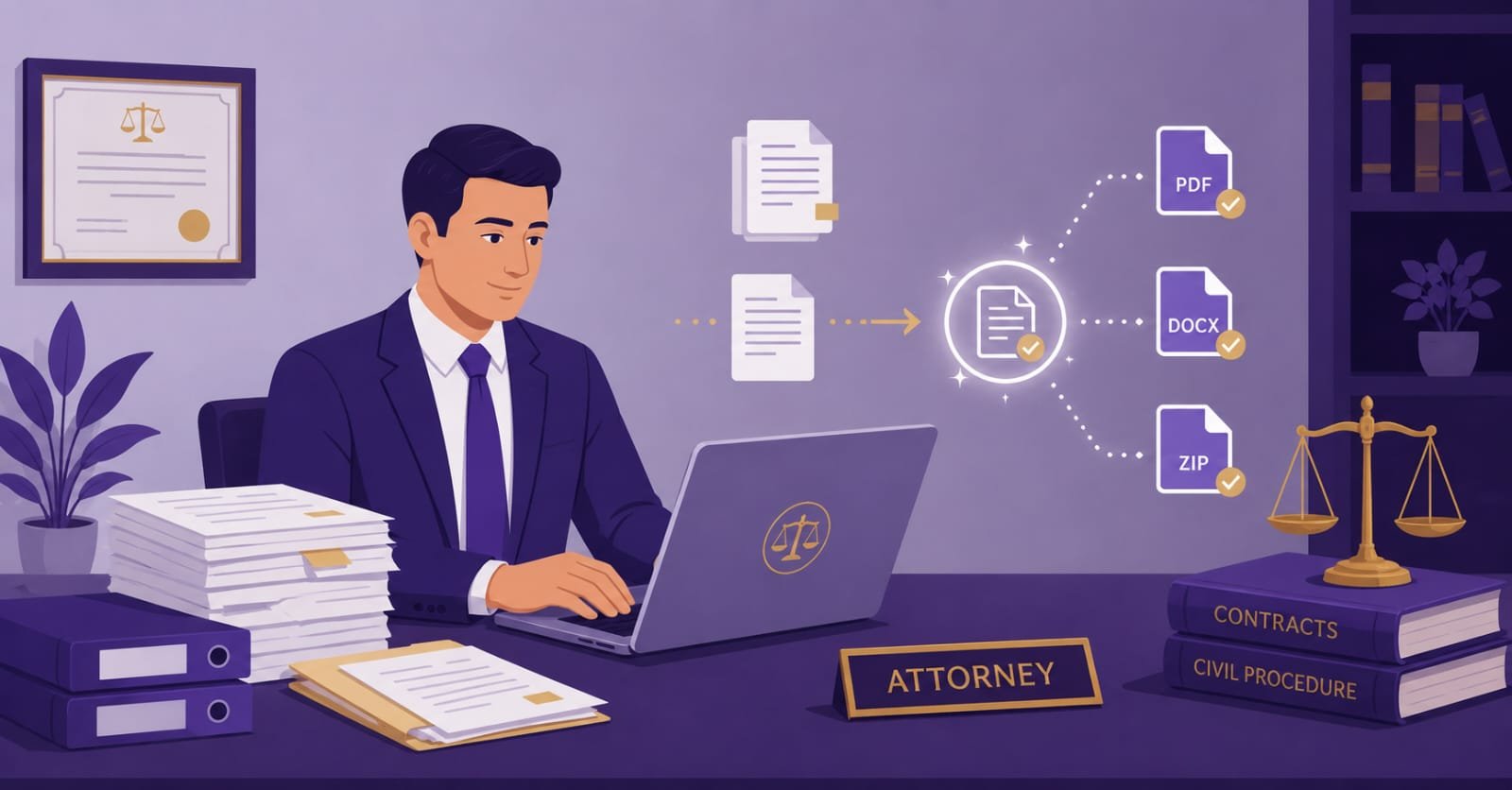
A typical AI-assisted drafting session now looks like: define the document type and key terms, let the AI generate a first full draft, run an automated benchmark check against standard clause structures to catch obvious gaps, then do a focused human review pass concentrated specifically on the clauses that matter most for that client’s situation — rather than reading every boilerplate paragraph with equal scrutiny. That focused-review approach is where most of the real time savings comes from, not the initial drafting step itself.
Client Communication Gets Faster Too
Beyond contracts themselves, AI assistance has extended into drafting client update emails, summarizing matter status, and turning meeting notes into action items — administrative work that used to compete for the same hours as substantive drafting.
What Hasn’t Changed
Negotiation strategy, judgment calls on unusual deal terms, and explaining risk to a client in plain language are still entirely human work. AI tools speed up getting words on the page; they don’t replace the legal reasoning about which words should be there for a specific client’s actual situation.
Frequently Asked Questions
Do clients need to be told when AI was used to draft their documents?
Disclosure expectations vary significantly by jurisdiction and bar association — check your specific state or country’s current guidance rather than assuming a universal rule.
Is it worth it for a very low-volume solo practice?
The time savings scale with volume — a solo attorney drafting one or two agreements a month may not see the same return as one drafting weekly, where the setup time pays off faster.
What’s the biggest workflow mistake attorneys make adopting these tools?
Treating the AI draft as close to final rather than as a faster starting point — the review discipline still has to be there.
Final Thoughts
The honest version of “AI cuts drafting time in half” is that it cuts the blank-page and first-draft time roughly that much, while review time stays largely intact — which is still a meaningful win for a solo practice where every hour is billable or unbillable, with nothing in between. For a closer look at how specific tools compare, see our breakdown of 5 AI contract drafting tools tested head to head, and our piece on a month of AI-assisted legal research covers the research side of a similar workflow shift.