How to Use AI for Legal Research (Without Getting It Wrong)
AI can dramatically speed up legal research — but it can also hallucinate cases that don’t exist. Here’s how to use it safely and effectively.
AI is changing how lawyers write. These are the best AI writing tools built specifically for legal professionals in 2026.
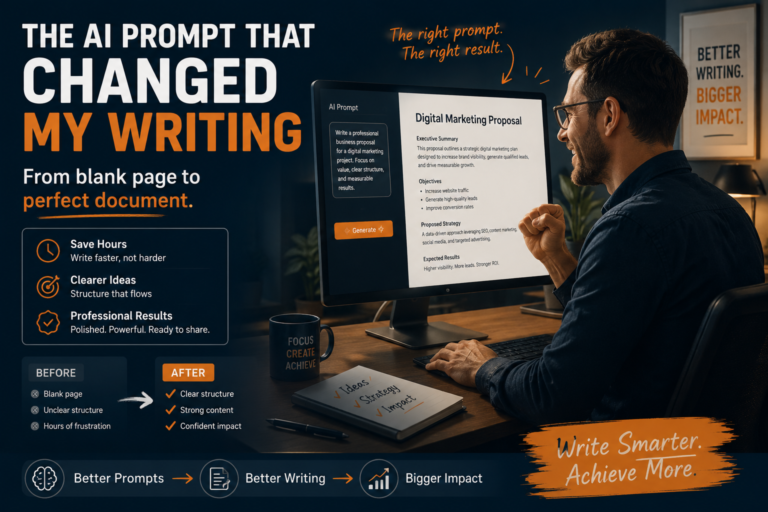
I work as a project manager, which means I spend a significant portion of my working life writing things — status reports, meeting summaries, escalation emails, change requests, stakeholder updates. None of it is glamorous writing. All of it has to be clear, professional, and fast. I had been using AI tools inconsistently for about…
Content strategy for most businesses exists in one of three states: nonexistent (posting randomly when someone has time), reactive (responding to current events and opportunities without a plan), or planned but not executed (a beautiful strategy document that sits unused after the kickoff meeting). AI has made a fourth state newly possible: a comprehensive, execution-ready…
Research that once required hours of database searches, article reading, and manual synthesis can now be accelerated dramatically with AI tools. But AI-assisted research comes with a critical requirement: verification. AI tools can produce plausible-sounding inaccuracies, fabricate citations, and present outdated information with the same confident presentation as accurate, current content. This guide shows you…
Email remains one of the most time-consuming communication channels for professionals, with research consistently showing knowledge workers spend 2 to 3 hours per day on email. AI tools have transformed this reality — what previously required careful drafting over 15 to 20 minutes can now be accomplished in 2 to 3 minutes with a well-crafted…
AI writing tools have moved from novelty to mainstream in professional environments with remarkable speed. Lawyers, marketers, journalists, consultants, and business communicators across every industry now regularly use AI to draft, refine, and produce written work. This widespread adoption has outpaced the development of clear professional and ethical frameworks, leaving many practitioners uncertain about the…
The quality of AI-generated business writing depends almost entirely on the quality of your prompts. A vague prompt produces generic output. A specific, well-structured prompt produces professional, usable content. This guide provides 20 proven prompts for the most common business writing tasks. Email Prompts For follow-up: “Write a professional follow-up email to [name] after our…
Artificial intelligence is transforming legal document drafting by reducing the time and cost of creating first drafts. Lawyers, paralegals, and business owners are using AI tools to draft contracts, agreements, letters, and other legal documents at a fraction of the traditional time investment. This guide shows you how to use AI for legal document drafting…
AI writing comes with its own vocabulary that can be confusing for newcomers. Understanding these 30 key terms will help you use AI writing tools more effectively, follow industry discussions, and communicate clearly with other AI tool users. Foundational Terms Artificial Intelligence (AI): Computer systems that perform tasks normally requiring human intelligence, including understanding language,…